As a drunk and sincere fan once shouted at Jeff Tweedy during a Wilco show, I too must shout at Ira Glass: "How'd you get so insightful?!"
Behold:
"Nobody tells this to people who are beginners, I wish someone told me. All of us who do creative work, we get into it because we have good taste. But there is this gap. For the first couple years you make stuff, it’s just not that good. It’s trying to be good, it has potential, but it’s not. But your taste, the thing that got you into the game, is still killer. And your taste is why your work disappoints you.
"A lot of people never get past this phase, they quit. Most people I know who do interesting, creative work went through years of this. We know our work doesn’t have this special thing that we want it to have. We all go through this. And if you are just starting out or you are still in this phase, you gotta know its normal and the most important thing you can do is do a lot of work. Put yourself on a deadline so that every week you will finish one story. It is only by going through a volume of work that you will close that gap, and your work will be as good as your ambitions. And I took longer to figure out how to do this than anyone I’ve ever met. It’s gonna take awhile. It’s normal to take awhile. You’ve just gotta fight your way through."
What I love about this is how Glass the Almighty uses one hand to jingle the keys of encouragement above our giggling eyes while lighting a fire under our ass with the other. Distilled, it's your standard call to arms from a luminary person, twisted up and made original by an acknowledgment you don't often find in these types of interviews: You will suck, probably for a long time.
What's more, if you're good, you'll be aware that you suck, which begs the question: If excellence springs from self improvement, self improvement from self awareness, self awareness from self scrutiny, and self scrutiny from taking constant stock of your weaknesses, how do you keep from being a gloomy asshole on your way to the top?
I suggest elephants. Elephants and William Hung.
This is a lot to ask, but I invite you to take a trip down memory lane with William Hung's original American Idol audition. It's painful, it's heartbreaking, it drops an anvil of a question on your sensibilities: "How, benevolent Creator, could you allow this man to wake up in the morning, stare sure-footedly into the mirror, and say, 'You can sing. You can sing the shit out of this song. You should share your gift with millions.'?" Isn't it unfair? Isn't it a drag that Mr. Hung had no one in his life to keep him from embarrassing himself, to tell him to focus on literally anything else?
Yes to both. But consider Hung's obliviousness as a function. Putting aside for a moment whether or not he should have done what he did, his blissful ignorance of his own shortcomings resulted in him actually accomplishing his goal. That's kind of powerful.
Now consider that ignorance as a tool for someone with a little more potential. If you're lucky, you're a bit clueless when you first start learning a skill that you intend to showcase to other people. That's perfect, because you definitely suck on day one and may continue to do so for a while. For a lot of people, the reality of that is too much even for self discipline to overcome, so they quit or turn their ambition into whatever their equivalent of "I only sing in the shower" might be. These folks value truth over the possibility of being made foolish, and that's fine. It might even be what the smart money says.
But the tradeoff is a forfeiture of the lottery ticket that the Misfits, Television, The Horrors, and MGMT decided to buy with their credit of healthy ignorance (DumbBucks™?). In the beginning, some of these guys couldn't even play their instruments, which would be enough for a lot of folks to question whether or not they should pursue a job that requires... playing an instrument.
Others, like Ray Lamontagne, knew immediately that their skill didn't match their taste (i.e., that they sucked), but blotted it out with the will to soldier on, woodshed like crazy, perform a lot, and become very technically good. This is a tougher route because, unlike the William Hungs of the world, you glare at your weaknesses every day. At a certain point, you get up in front of people and experience what it's like for others to glare at them, too. To avoid mortal injury, there's only one way for the self aware to get through it: thick, Clint-Eastwood-crow's-foot elephant skin.
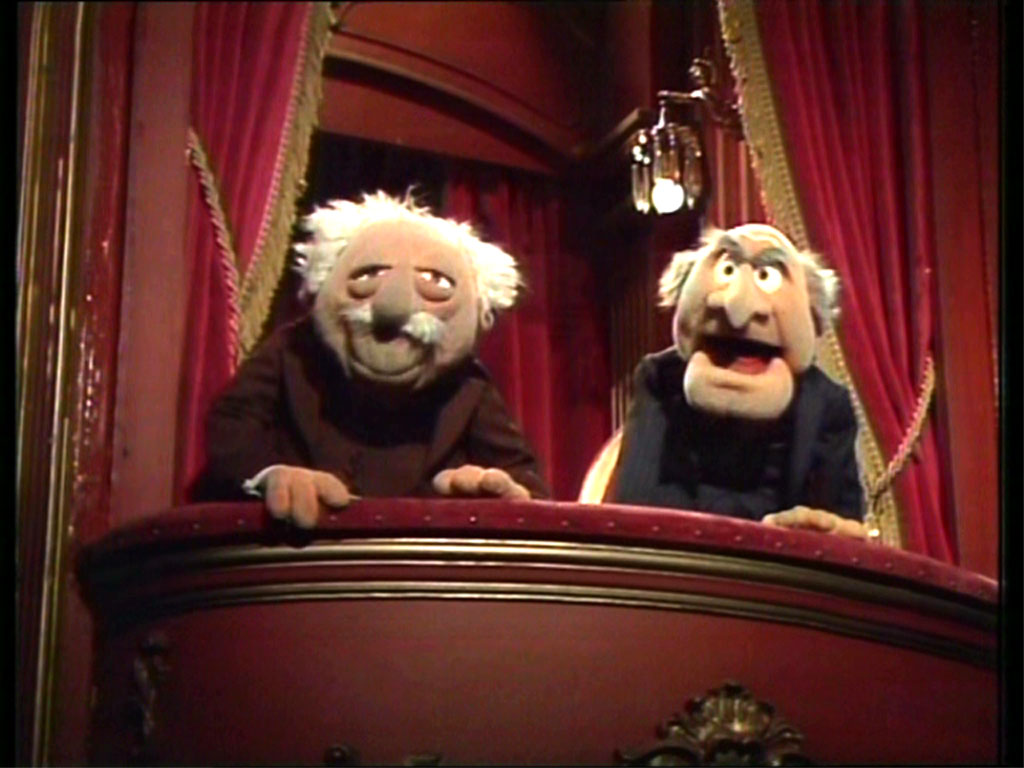
Ever read 1984? In it, there's a concept called "doublethink" that the bad guys use to brainwash the good guys into believing that history happened one way when everybody knows it didn't. Elephant skin is kind of like that, but instead of self deception, you simply downplay the negative things you know to be true. No blinders, just sunglasses. This is also called having a good attitude. You know the detrimental effects of dwelling on your shortcomings, so you work hard on them when you need to, have faith in your own ability to progress, and ditch the dwelling when it might otherwise distract and break you down... like right after hitting a bad note, forgetting your line, dodging moldy vegetables (real or metaphorical) hurled from the peanut gallery.
As with most things in life, all of this boils down to Johnny Knoxville, who once posited, "If you're gonna be dumb, you better be tough." Bless you, Ira Glass, for reminding us that the smarties need it, too.
Tuesday, August 27, 2013

Saturday, August 24, 2013
Art, Copy... Code?
"Art & Copy" should sound familiar to anyone in the ad agency game (or fans of Mad Men). Google's Art, Copy & Code initiative facilitates new kinds of experiences by acknowledging the power of the modern web for advertising and outreach. Kind of like projectrebrief.com for nerds.
Brighttrack: Free College Prep for Those Who Need It Most
Who says there’s no such thing as a free lunch? From extracurricular planning to campus tours to nurturing a unique Capstone Project that cherry-on-tops the resumé of under-resourced high schoolers, BrightTrack is poised to even the playing field of college candidacy in all the best ways. Sturdy roots in crazy smart founders and a list of advisors that reads like a who’s who of pragmatic do-gooding doesn’t hurt, either. I cannot wait to see this husband-wife operation grow like gangbusters.
Learning Betterer
Full disclosure #1: Things with tag lines like "It's free. Completely free." generally make me nervous. Google's "Apps for Education" is a big exception. The core offering of Web-based email, calendar & documents for collaborative study is cool but not particularly novel. Partnerships with disruptive carriers like YTL that hack around infrastructure limitations and get schools in developing nations online with 4G high speed wireless via Chromebooks, on the other hand, certainly are.
Full disclosure #2: Yes, I work at Google. No, I had nothing to do with creating Apps for Education (sadly!) and have not vested interest in promoting it.
Full disclosure #2: Yes, I work at Google. No, I had nothing to do with creating Apps for Education (sadly!) and have not vested interest in promoting it.
Saturday, July 20, 2013
Now That Our Jeans Can't Get Any Tighter
Blame it on turning 30, working in tech, getting married, living in Venice, friends with kids, a sudden interest in fish oil and comfortable insoles, or maybe overhearing someone at Coachella refer to Nirvana as "classic rock," but I've been thinking a lot about what it means to be relevant.
Before you roll your eyes, keep in mind that your faithful correspondent grew up in surf culture, cashed out for indie rock, merged with a ton of dot-commery, and now finds himself three blocks north of what's become some sort of yipster Graceland on the bleeding edge of Los Angeles. "Relevance" comes up a lot for me.
If being relevant = being cool = a strong portfolio of socio-cultural currency, most scenes glob a hefty premium on stockpiling that currency. Whether you're currency-fat or currency-lean, on the outside looking in, or on the inside looking bored, the concept of being cool need not always be front-of-mind (I think you're in trouble if it is), but it's important to at least know it's there.
Before you roll your eyes, keep in mind that your faithful correspondent grew up in surf culture, cashed out for indie rock, merged with a ton of dot-commery, and now finds himself three blocks north of what's become some sort of yipster Graceland on the bleeding edge of Los Angeles. "Relevance" comes up a lot for me.
If being relevant = being cool = a strong portfolio of socio-cultural currency, most scenes glob a hefty premium on stockpiling that currency. Whether you're currency-fat or currency-lean, on the outside looking in, or on the inside looking bored, the concept of being cool need not always be front-of-mind (I think you're in trouble if it is), but it's important to at least know it's there.
There's a dose of emptiness in this kind of richness. Being cool requires a lot of work and the gains are scant depending on what kind of currency you're after. By and large, when you picture what makes a hipster tick, the posturing and emperor's clothes that come to mind are kind of their own rewards. And when it comes to things that matter – things like good citizenship – apathy is still a lot safer than caring. It just feels so good not to care. And it pairs well with American Spirits.
But what if caring was on-trend? What if instead of withdrawing from the mainstream conversation, the subculture-appropriate thing was to engage in it with the intention of bettering things for other people?
Folks in their 30s are capable of getting it (and many do), but it's not really second nature. We grew up with D.A.R.E., Save the Whales, The More You Know, etc. We recycle and wear our seat belts, often in an I-was-raised-Catholic-so-I'm-still-Catholic-but-not-really-religious kind of way. A lot of this do-goodery was just starting to get big when we were in slap bracelets and Rollerblades. We were guinea pigs for goodness; hence, we kind of poke at it, intrigued, academic. And that's fine – sweeping edits to the zeitgeist need to start somewhere. So be it if that somewhere is well-meaning but detached. We're also about to start running the world, which lays a nice foundation for the ones after us, the part of the generation I foresee really changing the game.
They're in college and a few years out of it, dreamy, can't remember when they didn't need to separate cardboard from plastic. Altruism is hardwired into their thinking – not, like, an appreciated thing in a zoo. Idealism and risk-taking on their own aren't unique for people this age. What sets these kids apart is at once their nemesis and catalyst: a bleak economy with tiny job prospects to match. Getting a "real job" right now is terrifying.
What could possibly be good about that? Some might say that kind of fear ropes fresh grads into jobs they hate (if they can find one), choking their ideals, making them lame flag bearers for this idea of caring as cachet. But what if the economic necessity of job-having morphed into a good thing, really did turn out to be the mother of invention? What if it pushed the up-and-comers over the hump of complacency, closer to founding that B corp, organizing that student coalition, signing up with Teach for America, or something equally demanding of the kind of commitment that comes only from having no other options?
Daunted by such a thing, my and the generation before mine might have gone back to school for basket weaving or something. Tried to fit into a structure that we hoped would tell us to get out of the rut. The new blood has a fresher role model to emulate in these rough situations, though – one that deals in tenacity and brains as its currency, one composed of another breed of meaning-based hipster: the entrepreneur.
No, every early 20-something startup mogul is not in it to change the world for the better (cue Gavin Belson quote). But there's no question they've made it cool to get shit done. That's a beautiful thing when you consider the kind of bootstrapping it will take for their do-gooding counterparts to breathe life into things like sustainable civil engineering, corporate social responsibility, microfinance, education, starting a movement, giving a damn, and a zillion other philanthropic opportunities teed up for the dedication of the next generation.
A lot of folks think it's silly to be a cultural optimist in this day and age. That may be so, but the reasons to be one right now are starting to stack up. Given a few more years and another breakthrough or two, I might just be convinced.
But what if caring was on-trend? What if instead of withdrawing from the mainstream conversation, the subculture-appropriate thing was to engage in it with the intention of bettering things for other people?
Folks in their 30s are capable of getting it (and many do), but it's not really second nature. We grew up with D.A.R.E., Save the Whales, The More You Know, etc. We recycle and wear our seat belts, often in an I-was-raised-Catholic-so-I'm-still-Catholic-but-not-really-religious kind of way. A lot of this do-goodery was just starting to get big when we were in slap bracelets and Rollerblades. We were guinea pigs for goodness; hence, we kind of poke at it, intrigued, academic. And that's fine – sweeping edits to the zeitgeist need to start somewhere. So be it if that somewhere is well-meaning but detached. We're also about to start running the world, which lays a nice foundation for the ones after us, the part of the generation I foresee really changing the game.
They're in college and a few years out of it, dreamy, can't remember when they didn't need to separate cardboard from plastic. Altruism is hardwired into their thinking – not, like, an appreciated thing in a zoo. Idealism and risk-taking on their own aren't unique for people this age. What sets these kids apart is at once their nemesis and catalyst: a bleak economy with tiny job prospects to match. Getting a "real job" right now is terrifying.
What could possibly be good about that? Some might say that kind of fear ropes fresh grads into jobs they hate (if they can find one), choking their ideals, making them lame flag bearers for this idea of caring as cachet. But what if the economic necessity of job-having morphed into a good thing, really did turn out to be the mother of invention? What if it pushed the up-and-comers over the hump of complacency, closer to founding that B corp, organizing that student coalition, signing up with Teach for America, or something equally demanding of the kind of commitment that comes only from having no other options?
Daunted by such a thing, my and the generation before mine might have gone back to school for basket weaving or something. Tried to fit into a structure that we hoped would tell us to get out of the rut. The new blood has a fresher role model to emulate in these rough situations, though – one that deals in tenacity and brains as its currency, one composed of another breed of meaning-based hipster: the entrepreneur.
No, every early 20-something startup mogul is not in it to change the world for the better (cue Gavin Belson quote). But there's no question they've made it cool to get shit done. That's a beautiful thing when you consider the kind of bootstrapping it will take for their do-gooding counterparts to breathe life into things like sustainable civil engineering, corporate social responsibility, microfinance, education, starting a movement, giving a damn, and a zillion other philanthropic opportunities teed up for the dedication of the next generation.
A lot of folks think it's silly to be a cultural optimist in this day and age. That may be so, but the reasons to be one right now are starting to stack up. Given a few more years and another breakthrough or two, I might just be convinced.
Sunday, June 23, 2013
Ahoy
This is post #1.
I'm excited to have a place to spill my thoughts on culture and good citizenship.
This is a terrible example of the long-form musings to come.
I'm excited to have a place to spill my thoughts on culture and good citizenship.
This is a terrible example of the long-form musings to come.
Subscribe to:
Posts (Atom)